Studio Advantages — focused on outcomes and long-term wellbeing
Small-class format with teacher-led adjustments
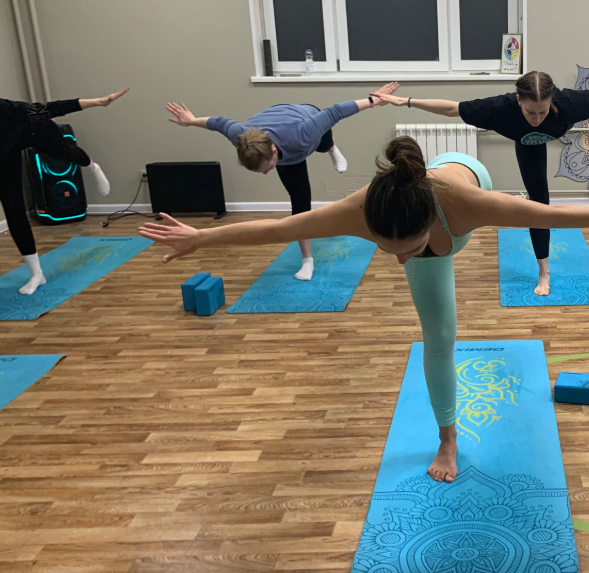
Small classes reduce noise and ensure every participant receives meaningful attention. In practical terms, teachers can observe alignment, breathing patterns and fatigue markers, then offer individualized regressions or progressions in real time. This reduces the likelihood of practicing in positions that overload vulnerable tissues and speeds up skill acquisition: learners receive immediate corrective cues, alternative loadings, and homework suggestions that are realistic for their schedule. For students returning from injury, this format allows trainers to stage graduated exposure to load and complexity with on-the-spot feedback—an approach that shortens recovery timelines and builds robust, transferable movement habits for everyday life.
Evidence-aware sequencing and measurable progressions
Each class follows a deliberate progression anchored in principles of progressive overload, motor learning and physiological recovery. Rather than random flows, sequences are designed to reinforce movement patterns—hip hinge, thoracic rotation, shoulder stability—that underpin sustainable function. Teachers log objective markers like repetition counts, hold durations, and range-of-motion baselines so progress can be tracked across sessions. This transparency demystifies development and keeps expectations realistic: participants see incremental gains in strength, balance, and breath control rather than abrupt changes that cannot be maintained. The result is steady, safer adaptations that compound over months.
Integrated breathwork and autonomic regulation techniques
Breath practices are taught not as esoteric exercises but as practical tools for calming the nervous system and enhancing movement efficiency. Sessions train paced breathing, diaphragmatic engagement and scalable pranayama variations designed to shift autonomic tone toward parasympathetic balance. These techniques are integrated into warm-ups to prime movement and used in cooldowns to consolidate calm. For participants with stress-related sleep disruption or anxiety, structured breath protocols provide simple, repeatable anchors that reduce physiological arousal and support better sleep, clearer focus and improved recovery from training loads.
Hybrid delivery model: studio, livestream, and on-demand
Flexibility improves adherence. Our hybrid model supports in-studio practice for hands-on learning, livestream classes for community connection when travel is difficult, and an on-demand library for short routines (5–20 minutes) that slot into busy days. Attendance consistency increases when participants can switch formats seamlessly during travel, illness, or fluctuating schedules. Teachers provide progress notes and suggested at-home micro-practices so online sessions remain coherent with in-studio curricula—preserving quality and continuity irrespective of delivery medium.
Trauma-sensitive and accessibility-focused instruction
Instruction is calibrated to be trauma-informed and accessibility-friendly: cues are invitational, tactile assists are optional and offered only with consent, and movement options are framed as choices rather than prescriptions. This inclusive tone ensures participants of varied backgrounds feel safe to explore practice without pressure. Adaptive equipment—bolsters, straps, blocks and chairs—are integrated so people with range limitations or sensory sensitivities can participate fully and with dignity. This approach broadens the studio’s reach and helps individuals rebuild confidence while practicing within comfortable, individualized boundaries.
Teacher mentorship and consistent curriculum quality
To ensure consistent teaching quality across classes, instructors participate in ongoing mentorship and curriculum reviews. New teachers are onboarded into a framework of cueing standards, sequencing templates, and safety protocols; experienced mentors observe and provide feedback. This investment in teacher development maintains clarity and reliability in class delivery so students can expect the same core values—safety, progression and measurement—regardless of the teacher on duty. Over time, this elevates the entire learning environment and supports better outcomes for regular attendees.